Mobile phone cover materials have evolved from plastic and metal to glass/ceramic, and further to nano-textured glass, continuously innovating to meet consumer demands. Key factors affecting the quality of mobile phone glass covers include etching depth, angle, particle statistics, roughness, among others. The Atometrics White Light Interferometer AM-7000 Series can precisely measure these process parameters, helping manufacturers enhance the quality of mobile phone glass covers.
I. The Evolution of Mobile Phone Cover Materials
Driven by technological advancements and changing consumer demands, mobile phone cover materials have continuously evolved towards being thinner, more shatter-resistant, wear-resistant, pleasant to the touch, aesthetically pleasing, and high-end.
- > Era 1.0: Plastic
In the early days, most mobile phone covers used low-cost and easily processable plastic materials. However, their wear resistance and aesthetic appeal could not meet the demands of the rapidly rising smartphone era.
- > Era 2.0: Metal
Metal improved the overall strength and durability of devices, offering a refined and elegant appearance. However, metal can potentially interfere with signal reception and wireless charging.
- > Era 3.0: Glass/Ceramic
With the proliferation of 5G and wireless charging technology, manufacturers began adopting glass and ceramic materials. Glass covers effectively avoid the signal interference issues associated with metal while enabling wireless charging functionality.
- > Era 4.0: Nano-textured Glass
In today's highly competitive mobile phone market, beyond basic shatter and scratch resistance, consumers place greater emphasis on aesthetics, tactile feel, personalization, and a premium experience. Creating specific textures on glass covers through chemical etching or crystal growth processes can achieve effects such as anti-fingerprint properties, colorful iridescence, and a warm, smooth touch.
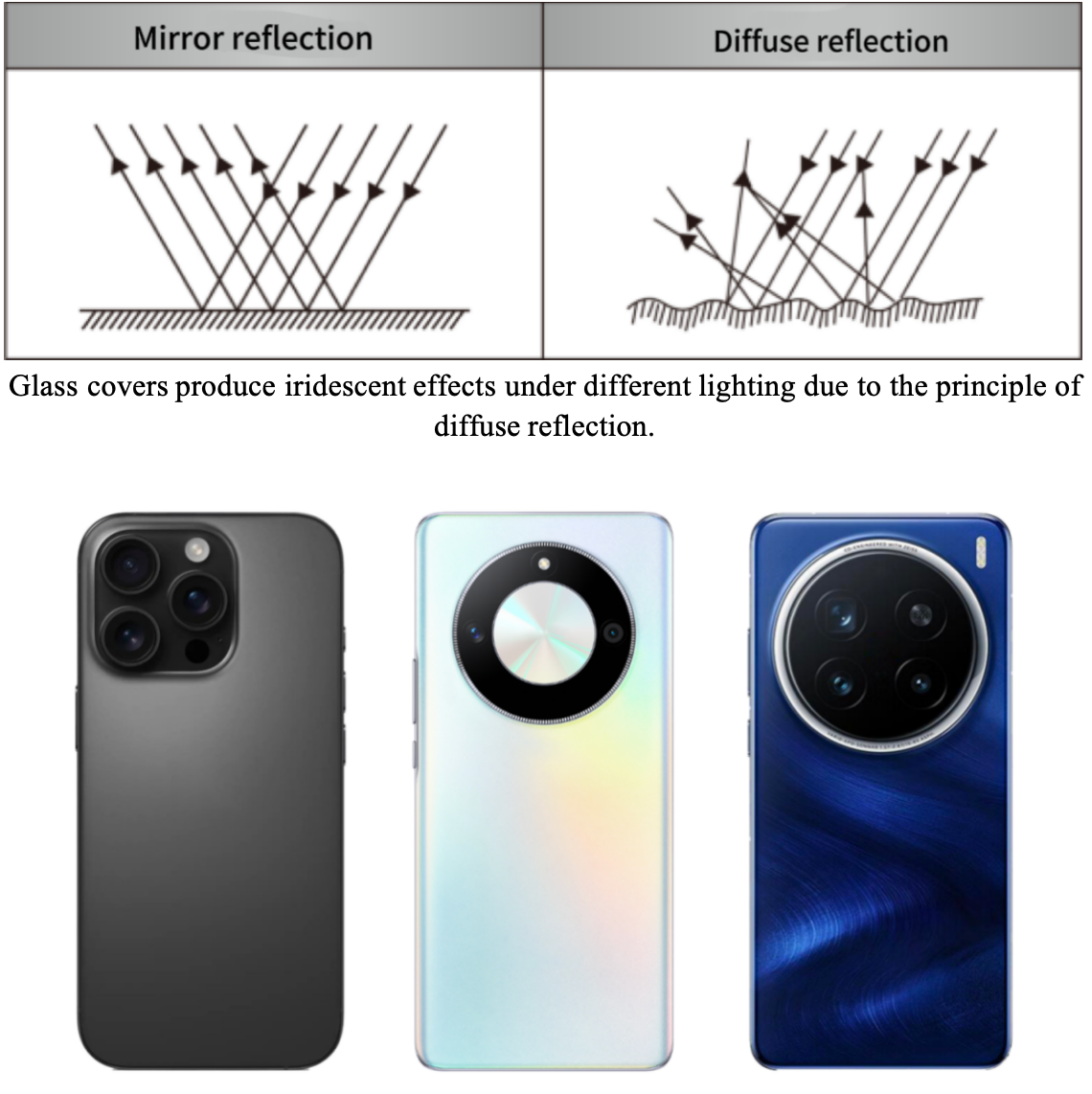
Glass covers produce iridescent effects under different lighting due to the principle of diffuse reflection.
II. The Manufacturing Process of Mobile Phone Glass Covers
To achieve glass covers that meet specific process requirements, techniques like chemical etching are applied to the glass substrate.
The acid etching process for glass primarily involves the following steps:
1. Cleaning the Glass Surface: Removes impurities, oils, etc., to prevent etching defects.
2. Applying the Etching Mask: Ensures the mask is in tight contact with the glass surface to prevent solution seepage. The etching mask is designed according to different pattern requirements, typically made from corrosion-resistant materials like photoresist or chrome.
3. Applying the Etchant: The etchant formulation considers factors such as glass type, desired etching depth, surface quality, and process control. It is primarily composed of hydrofluoric acid (HF), often combined with ammonium bifluoride, nitric acid, sulfuric acid, hydrochloric acid, etc.
4. Controlling Process Factors like Time/Temperature: Both etching time and temperature significantly impact the etching results.
5. Cleaning and Post-Processing: Removes residual etchant and reaction by-products. Includes post-processing steps like polishing, coloring, and cutting to required specifications.
III. Key Factors Determining the Quality of Mobile Phone Glass Covers
Every parameter—from mask creation and etchant formulation to controlling time and temperature—is critical. Before mass production, engineers undergo numerous experimental adjustments, combining years of experience and calculations to finalize each parameter, ensuring process stability and product consistency during mass production.
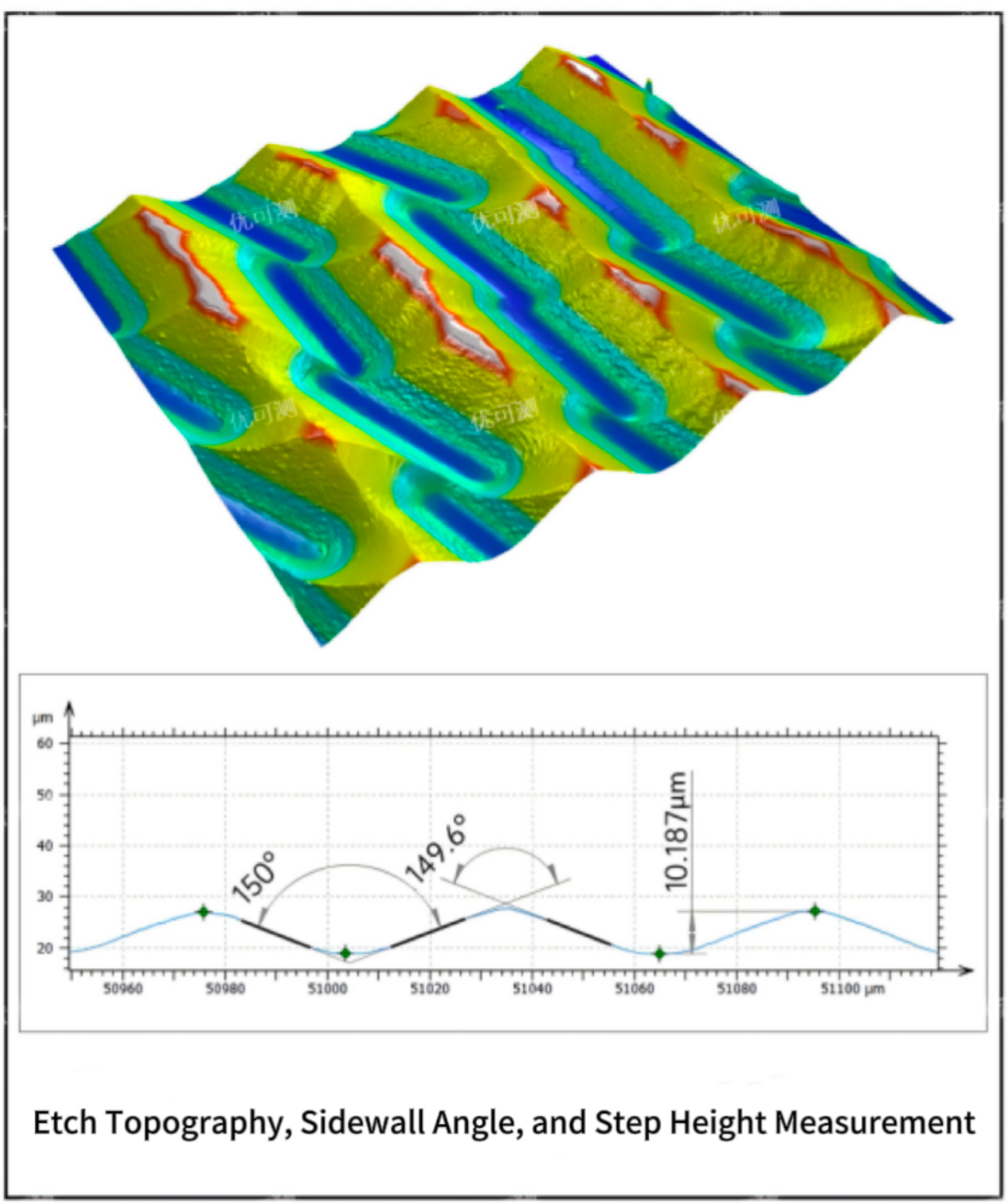
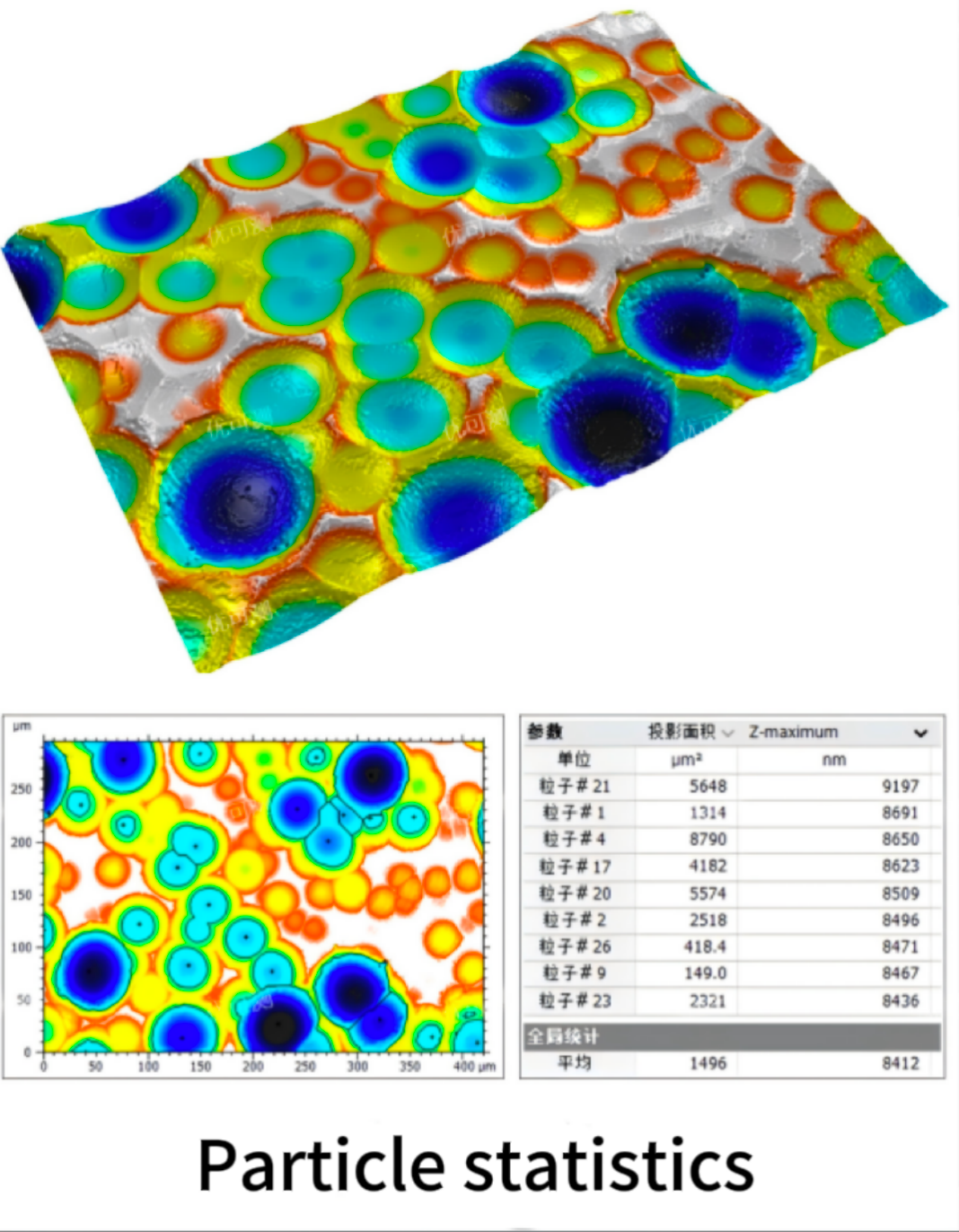
The Atometrics White Light Interferometer AM-7000 Series scans and generates a 3D topography of the glass cover surface within seconds. It provides precise measurements for numerous process parameters such as etching depth, angle, particle statistics, and roughness. By means of Surface Roughness Measurement, productivity can be enhanced. This enables engineers to quickly adjust processes, thereby improving production efficiency and yield rates.
The following are case studies of glass cover inspections using the Atometrics White Light Interferometer AM-7000 Series:

Boardstone lntelligent(Shenzhen)Co.,Ltd.
6F Building C Kaifa Plaza,7006 Caitian Rd.,Futian Dist,Shenzhen
Hotline:400 080 3885
Sales@atometrics.com.cn
WhatsApp: +86 13316897904