Introducing White Light Interferometers to Control Microfluidic Chip Morphology Leads to Significant Performance Improvements
Microfluidic chips, also known as lab-on-chips, are a scientific technology characterized by the manipulation of fluids at the micrometer scale. They integrate or nearly integrate basic operational units from fields such as chemistry and biology—including sample preparation, reaction, separation, detection, cell culture, sorting, and lysis—onto a chip of a few square centimeters or even smaller. A network of microchannels allows controllable fluid to flow through the entire system, enabling various functions in conventional chemistry, biology, materials science, and optics laboratories.
Currently, microfluidic chips are mainly used in three major fields: analytical diagnostics, screening and synthesis, and organ-on-a-chip. In analytical diagnostics, for example, microfluidic chips, as an analytical platform with low sample consumption, high analysis speed, and high sensitivity, have enormous application potential in point-of-care testing (POCT).
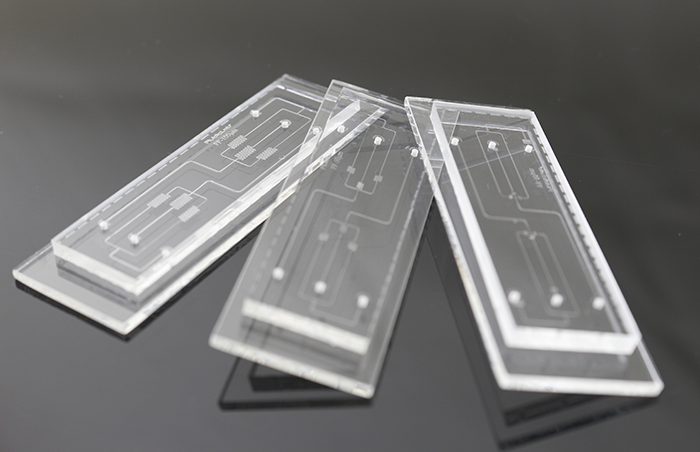
Improving Microfluidic Chip Performance: Urgent Need for Precise Surface Morphology Control
A well-known microfluidic chip brand in Shanghai, aiming to improve the performance and quality of its microfluidic products and precisely control factors such as reaction efficiency, reagent mixing, and liquid flow rate, needs to manage the surface roughness, microchannel height, and width of microfluidic chips to meet the needs of different customers.
To address this challenge, engineers urgently required higher-precision and more convenient testing tools. An engineer responsible for the brand stated, "Previously, we measured the height of microchannels using a slicing method and observation with an optical microscope. The results were inaccurate, which was very detrimental to product performance control!"
White Light Interferometer for Surface Morphology Measurement
Multiple Indicators Affect Chip Performance
After comparing various options, the brand selected the Atometrics white light interferometer as the testing equipment to control relevant parameters. Compared to other brands of white light interferometers, the Atometrics white light interferometer offers higher measurement accuracy, better software and hardware support, and a testing speed more than twice that of similar products. Atometrics also has a professional technical team that can provide effective technical support for future unmanned laboratory operations.
After the equipment was deployed and tested for a period of time, engineers at Atometrics learned that the surface roughness, height, and width of the microfluidic chip, which require precise quantitative control, will affect the flow rate of the reaction reagents, the reaction rate, and the completeness of the reaction.
Microchannel surface roughness: It has a significant impact on the flow rate of liquid samples and reaction reagents, as well as the reaction efficiency. By measuring surface roughness, the reaction rate can be improved, thereby enhancing product performance.
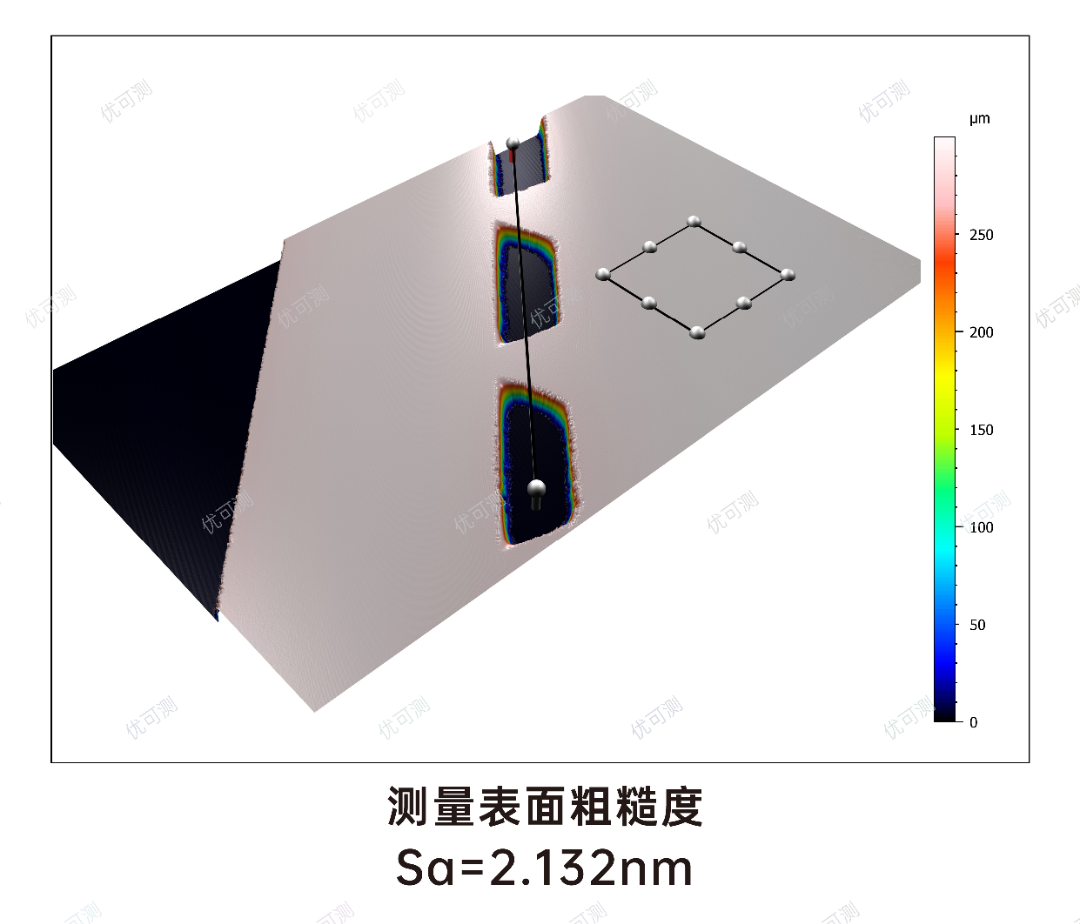
(Image taken with a white light interferometer AM series)
Microchannel height and width: These greatly affect the flow velocity, temperature, and pressure of the fluid within the microchannel. Microfluidic engineers can control the fluid flow by designing the height and width of the microchannels.
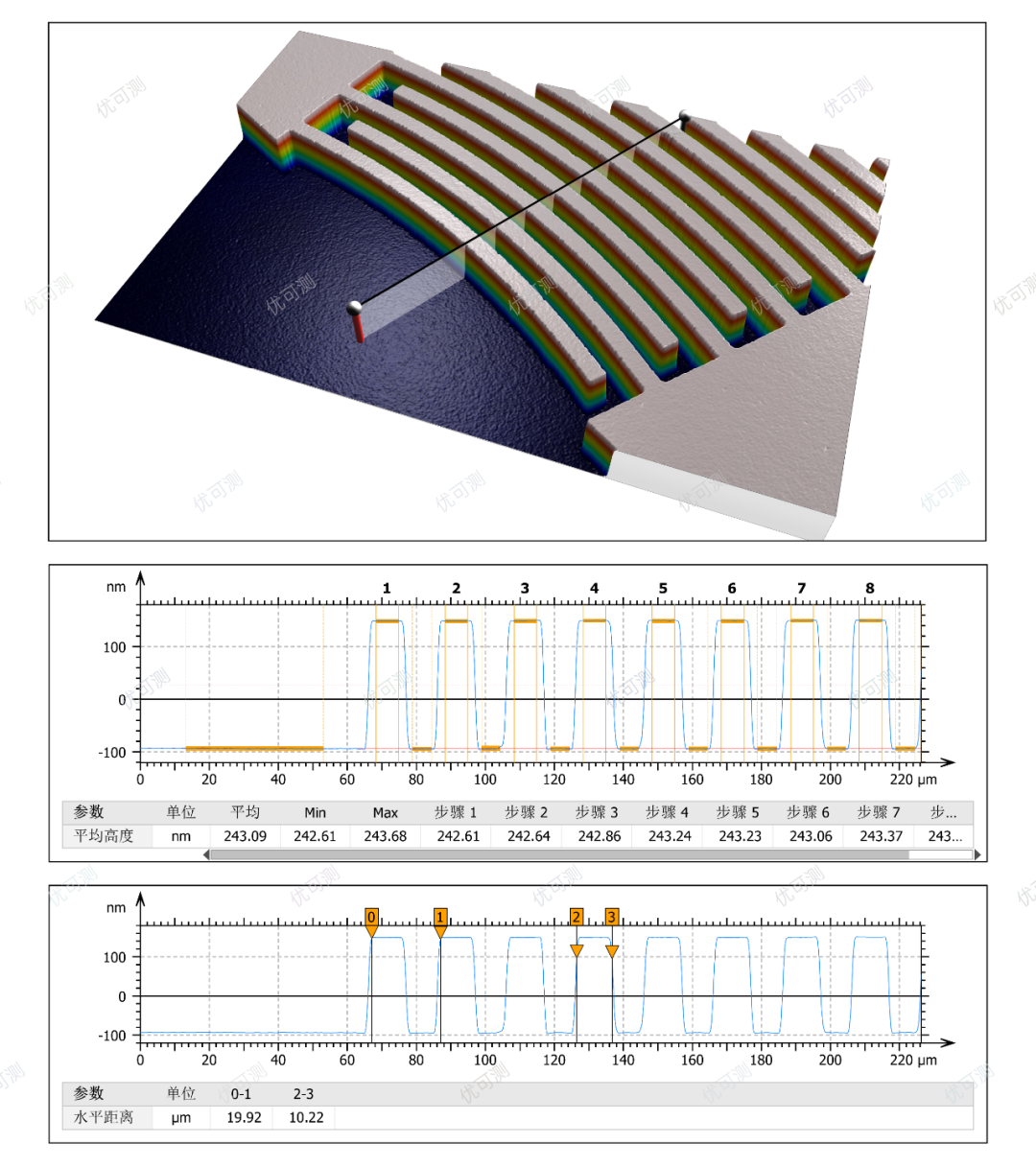
Some microfluidic chips have specific requirements for height and width. For example, the height and width of a microdroplet chip determine the size of the generated microspheres; the height and width of an organ-on-a-chip determine whether a given cell or tissue can pass through the microchannel structure.
Air Layer Thickness: The air layer thickness in a microfluidic chip significantly impacts the pressure, temperature, flow rate, and reaction rate of the reaction liquid within the microchannel. Precise control of the air layer thickness in microfluidic chips is crucial for accurately controlling product performance and reducing customer complaints.
For more testing case studies and selection solutions,
or if you have any precision testing needs,
please call Atometrics 's official technical hotline at 400 0803885.
Atometrics engineers will prioritize providing you with the best testing solution!

Boardstone lntelligent(Shenzhen)Co.,Ltd.
6F Building C Kaifa Plaza,7006 Caitian Rd.,Futian Dist,Shenzhen
Hotline:400 080 3885
Sales@atometrics.com.cn
WhatsApp: +86 13316897904