Under the goals of "Carbon Peak and Carbon Neutrality," the new energy market is expanding, and demand is growing. Hydrogen energy, due to its favorable and stable chemical properties, low-carbon and pollution-free nature, sustainability, renewability, and high energy density, is regarded as an ideal clean energy source. Atometrics continues to monitor the development of the new energy industry, committed to solving high-precision measurement challenges for new technologies, new applications, and new products. Below, Dr. Atometrics will take you into the world of hydrogen energy, the new "darling" of new energy.
I. Overview of Hydrogen Fuel Cells
Hydrogen energy refers to a form of new energy that uses hydrogen as an energy carrier. A hydrogen fuel cell is a type of new energy battery where hydrogen and oxygen undergo a chemical reaction to generate electricity.
When hydrogen and oxygen undergo a chemical reaction in a fuel cell, they only produce water and electric current. It is clean, low-carbon, produces no polluting gases, achieving true zero emissions. Additionally, hydrogen energy possesses advantages such as renewability and high energy density. Therefore, hydrogen energy is hailed as the "ultimate energy of the 21st century."
Among these, hydrogen fuel cells are the core product within the hydrogen energy industry.

II. Working Principle of Hydrogen Fuel Cells
The fundamental principle of a hydrogen fuel cell is the hydrogen-oxygen fuel cell. It primarily consists of an electrolyte, catalyst, anode material, cathode material, proton exchange membrane (PEM), gas diffusion layer (GDL), etc. Its working principle involves the redox reaction of hydrogen and oxygen at the anode and cathode, thereby generating electrical energy.
The specific process is: When hydrogen enters the anode catalyst layer through the anode gas diffusion layer, a chemical reaction occurs under the action of the catalyst, generating protons (H⁺) and electrons (e⁻). Simultaneously, the protons pass through the proton exchange membrane to the cathode catalyst layer, where they react with oxygen and electrons to form water molecules. The electrons then travel to the cathode through an external circuit, forming an electric current.
III. Development Prospects of Hydrogen Fuel Cells
With the global demand for new energy and clean energy continuously growing, and under the backdrop of "Carbon Peak and Carbon Neutrality," various regions are introducing policies to support the development of hydrogen fuel cells. Promoting green, clean, low-carbon, and renewable energy development has become an inevitable trend. Coupled with the increasing market share of new energy vehicles, the performance requirements and environmental standards for new energy batteries are also getting higher.
The research, development, and application of key materials such as new catalysts, gas diffusion layers, and proton exchange membranes have further improved the energy conversion efficiency and stability of hydrogen fuel cells, making them the "dark horse" in the new energy battery industry.
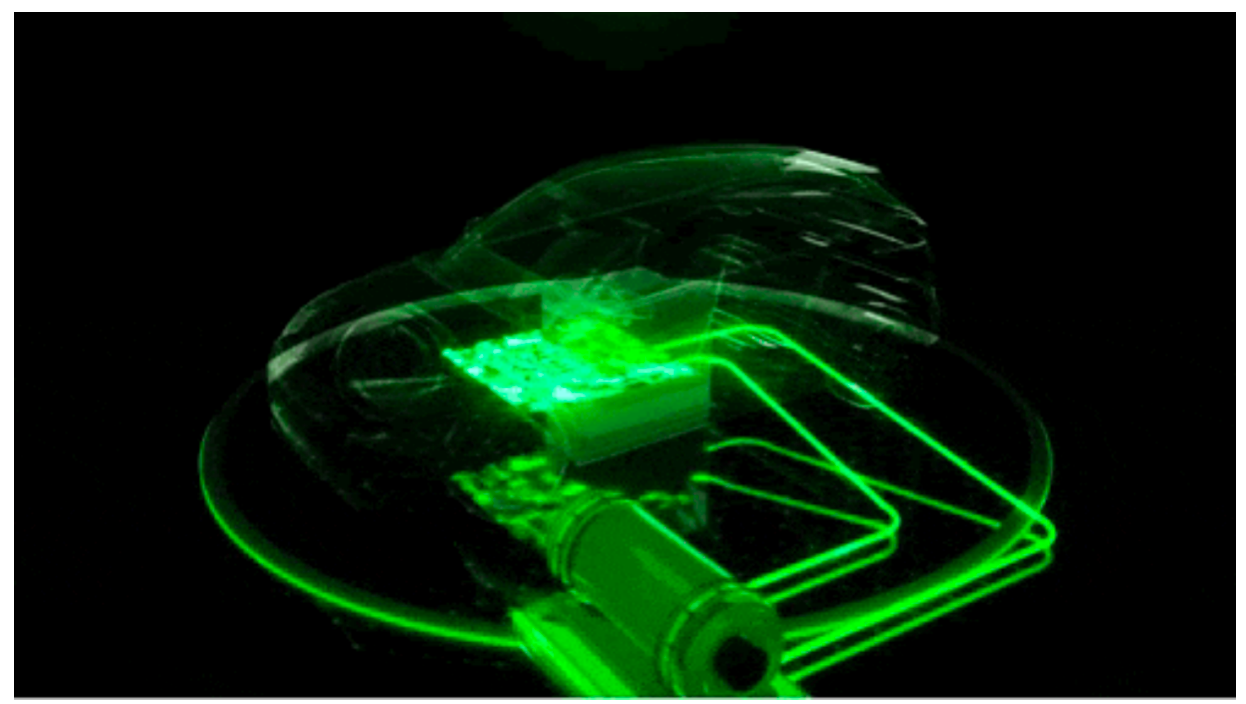
IV. Application Fields of Hydrogen Fuel Cells
Currently, hydrogen fuel cells are primarily used in the new energy vehicle industry, serving as the pioneering and crucial field for hydrogen energy applications. Additionally, there are stationary industrial applications such as power supply and heating for factories, buildings, and residential complexes. Compared to other electric vehicles, hydrogen fuel cells offer higher energy density, enabling greater vehicle range. Moreover, the reaction product is water, making it green, low-carbon, and pollution-free.
Many automotive companies, such as Hyundai, Toyota, and BMW, have launched hydrogen-powered vehicles, vigorously promoting hydrogen fuel cell vehicles. China has also issued corresponding plans, highlighting the importance of hydrogen energy in the new energy sector and promoting research and development of hydrogen fuel cell technology.
However, although there is a certain technical foundation for the production and transportation in the current hydrogen fuel cell field, some issues still require focused attention, such as factory environment, battery safety performance, and the selection and control of raw materials. Presently, the production cost of hydrogen fuel cells remains relatively high, with materials like catalysts and membrane materials inside the cells being expensive. Therefore, achieving widespread adoption and use of hydrogen fuel cells still has a long way to go.
V. Hydrogen Fuel Cell Inspection Case Study
Titanium Nitride Film Thickness Measurement for Hydrogen Fuel Cells:
Recently, a manufacturer specializing in new energy batteries planned to develop a hydrogen-powered vehicle battery. They hoped to measure the thickness of a titanium nitride metallic compound film on the battery's metal titanium, with an accuracy requirement of 1nm. Based on the client's needs, Atometrics engineers selected the Film Thickness Measurement Instrument AF-3000 Series to perform the inspection:

Titanium Nitride Film Thickness Measurement
The Film Thickness Measurement Instrument AF-3000 Series has its dedicated film thickness measurement system. The inspection determined the titanium nitride film thickness to be approximately 95.4nm, with a goodness of fit (matching degree) of 0.009081! After receiving the inspection report, the client expressed great satisfaction with the measurement results, stating: "This specialized film thickness measurement instrument is highly useful for us who focus on new energy batteries. Film thickness affects numerous factors like voltage, internal resistance, conversion efficiency, and safety. Therefore, many film layers within the battery require precise measurement. Having this type of portable measurement instrument makes our film measurement more convenient, fast, and accurate."
From a measurement principle perspective, film thickness measurement instruments utilizing spectroscopic interferometry can only measure transparent or semi-transparent films. Theoretically, metal films and metallic compound films are opaque and cannot be measured.
However, if such a film is thin enough to a certain extent, some material films may exhibit transparency. At this point, the film thickness measurement instrument can measure the thickness of metal films and metallic compound films. However, whether metal films and metallic compound films of different materials and thicknesses exhibit transparency to light of different wavelengths is uncertain. The Atometrics Film Thickness Measurement Instrument AF-3000 Series uses a deuterium lamp and a tungsten halogen lamp, with a maximum spectral wavelength coverage from 180nm to 2400nm!
If you encounter measurement needs for transparent film thickness, semi-transparent film thickness, metal film thickness, or metallic compound film thickness projects, please feel free to contact Atometrics for sample testing!

Boardstone lntelligent(Shenzhen)Co.,Ltd.
6F Building C Kaifa Plaza,7006 Caitian Rd.,Futian Dist,Shenzhen
Hotline:400 080 3885
Sales@atometrics.com.cn
WhatsApp: +86 13316897904