Recently, with the rapid development and increasing demand for AI technology, data centers operating under high loads are generating massive amounts of heat. Wu Xuchu, Vice Chairman of KPMG China, stated: "Talking to a beanbag for five minutes would require approximately 500ml of water for cooling." Heat dissipation has become a critical aspect of maintaining the operation of AI data centers. Currently, liquid cooling for optical modules is in a rapid development phase, and the minute difference in surface roughness between the optical module and the liquid cooling plate is becoming a key factor determining the stability of AI chips, GPUs, and even data centers.

From Air Cooling to Liquid Cooling: There's No Turning Back for Optical Module Heat Dissipation
With the large-scale deployment of 800G optical modules and the countdown to the commercialization of 1.6T products, improving optical module heat dissipation technology is urgent. As a key component in AI chips, optical modules directly determine the interconnect bandwidth, transmission speed, and system stability of AI clusters. Optical modules are highly integrated internally, and heat mainly originates from high-speed electrical chips and optoelectronic devices. The higher the speed, the more exponentially power consumption and heat flux density increase. Poor heat dissipation not only affects the performance and lifespan of individual modules but also has a cascading effect on the stability and reliability of the entire AI data center, leading to performance degradation, increased bit error rates, hardware failures, and a host of other problems.
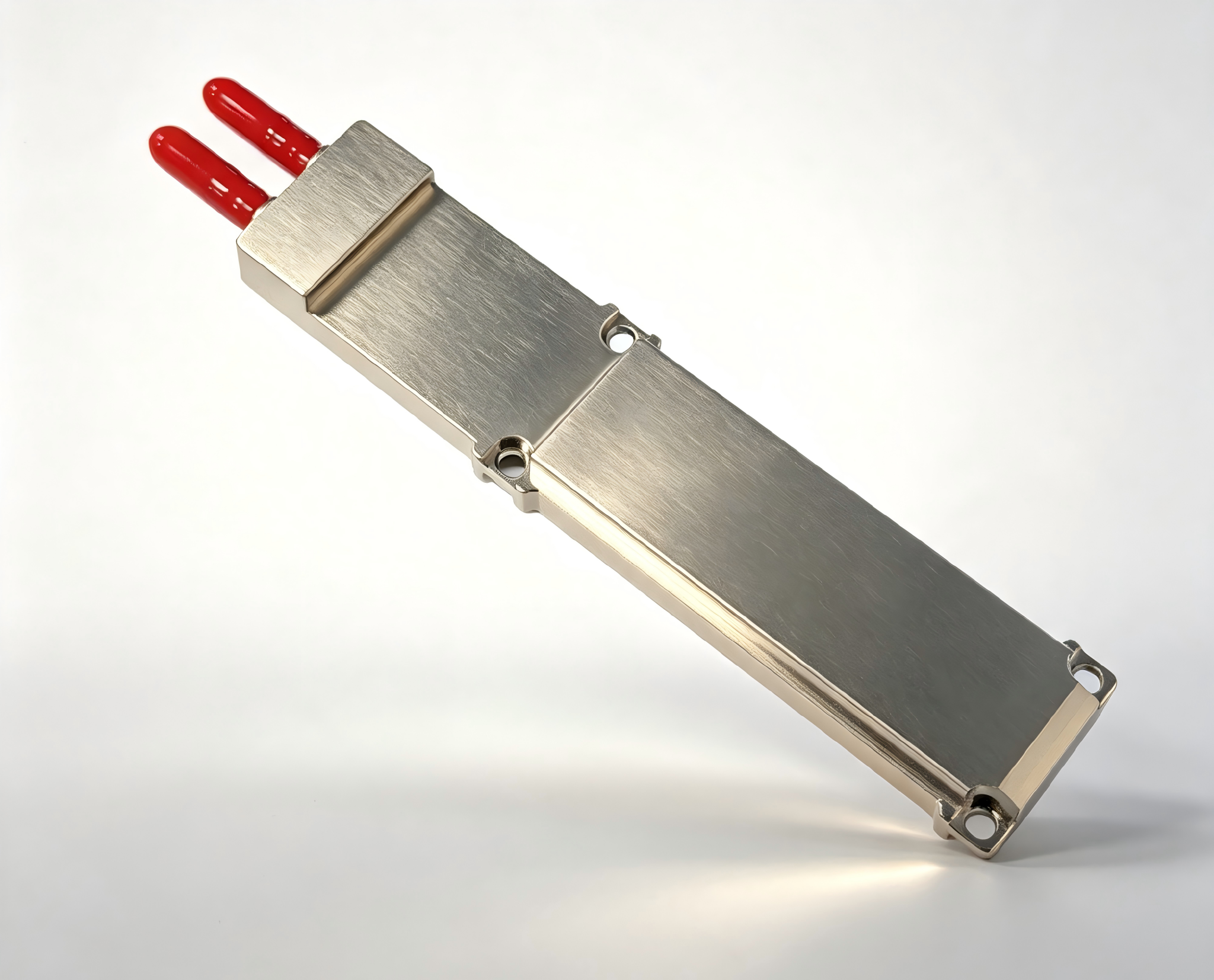
A 4U server can accommodate 32 800G modules, consuming over 450W of power. Air cooling is insufficient to handle such high heat flux density and can cause severe crosstalk. Therefore, the mainstream cooling approach has shifted from air cooling to liquid cooling, with liquid cooling plates directly attached to the metal casing of the optical module for heat dissipation.
The coolant undergoes forced convection within the microchannels of the liquid cooling plate, rapidly carrying away heat from the module's outer shell and keeping the internal lasers and DSP chips below their operating junction temperature. This direct-contact cold plate solution is simple in structure and has extremely low thermal resistance, but its bottleneck lies not in the flow channel design but in a crucial detail—the surface roughness of the liquid cooling plate.
Optical Module Liquid Cooling: Is Roughness a Factor? The tight contact between the liquid cooling plate and the optical module housing is not a perfect fit. Under a microscopic perspective, the surface of the liquid cooling plate after processing has an uneven contour.
Why measure the surface roughness of the contact surface between the liquid cooling plate and the optical module?
Because surface roughness is closely related to a physical quantity: contact thermal resistance.
The actual contact area is determined by the number of roughness peaks. When two surfaces are pressed together, only the discrete peak contact points actually conduct heat, and the area may only be 1% to 5% of the nominal area. If the roughness is too large, the peaks are sparse, and the heat flow channels are not smooth; if the roughness is too small, the surface is too smooth, and it may not be able to effectively penetrate the adhesive layer of the thermal interface material, forming a thick, high thermal resistance film.
The influence of the wetting and trenching of the thermal interface material. Thermal pads or thermal paste are usually installed between the cold plates of the optical module to fill the air gaps. Roughness directly determines whether the pads are firmly attached or gaps appear, and whether the paste is fully spread or squeezed out of the interface. At this point, it is necessary to deduce the optimal roughness range based on extensive engineering experiments. Deviating from this value can increase thermal resistance by more than 30%.
Atometrics White Light Interferometer: Precise Measurement of Liquid Cooling Plate Roughness and topography
For high-precision measurement applications such as the contact surface of optical module liquid cooling plates, traditional contact-type roughness measuring instruments are insufficient and cannot acquire the three-dimensional morphological features of the contact surface, only outputting a single two-dimensional contour.
The Atometrics white light interferometer, equipped with a large-range, high-speed nano-piezoelectric ceramic, utilizes the principle of white light interference to obtain the 3D morphology of the entire field of view in a single scan, with a vertical resolution up to sub-nanometer levels.
A liquid cooling plate customer required nanometer-level control of the roughness of the optical module contact surface. The accuracy and speed of the currently used contact-type roughness measuring instrument did not meet the requirements. The following are the measurement results obtained by Atometrics engineers using the AM-7000 series white light interferometer:
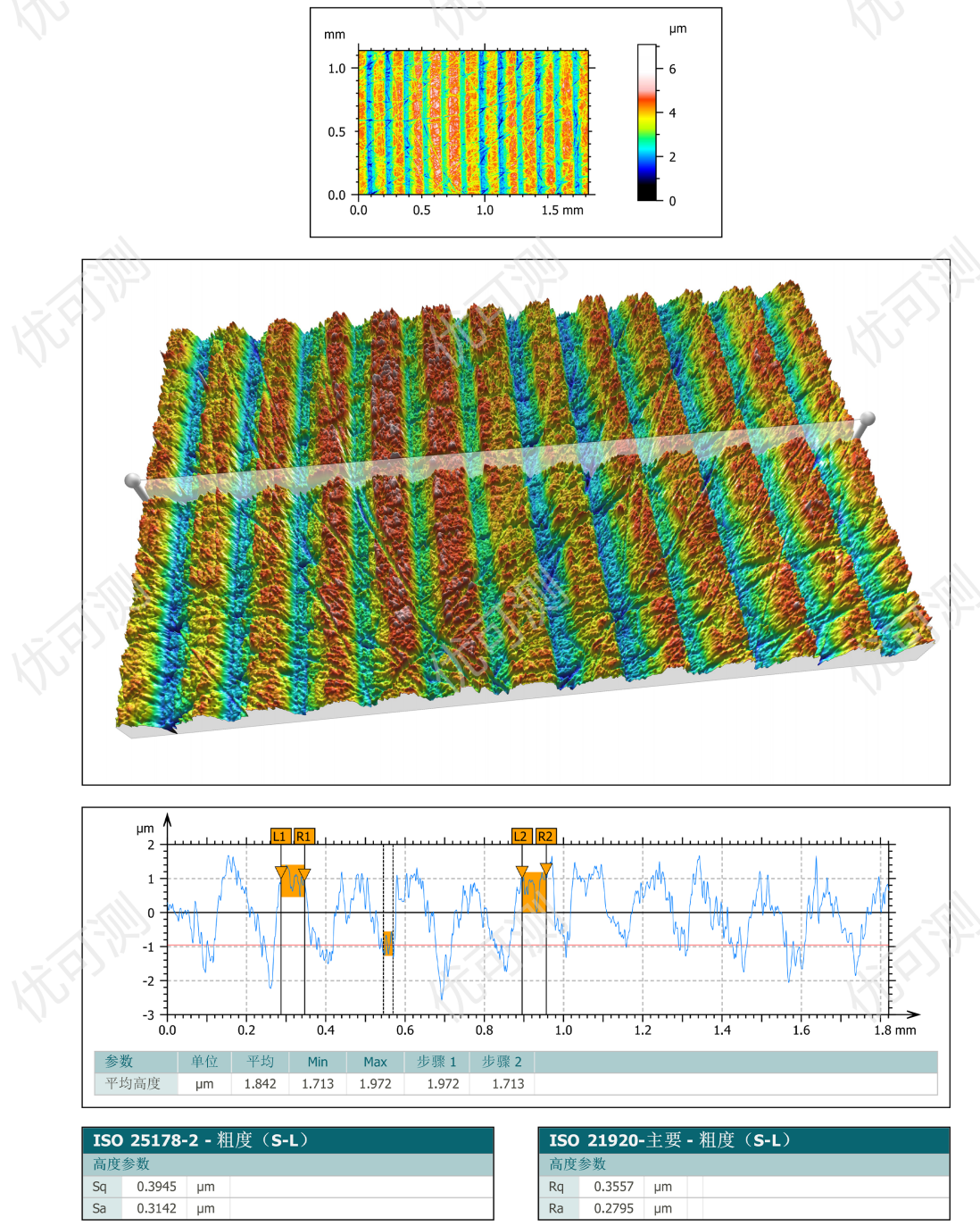
As can be seen, the AM-7000 series performs sub-nanometer precision measurements of surface roughness, line roughness, peak and average surface height, and 3D morphology. The customer stated that the measurement data is comparable to imported instruments, and the measurement speed is fast, with a maximum scanning speed of 400μm/s, significantly improving measurement accuracy and efficiency.
In the rapidly growing optical module heat dissipation industry, Atometrics white light interferometers will play a crucial role in multiple stages, including R&D, production, and quality control, making surface roughness and morphology a set of quantifiable, reproducible, and verifiable measurement data, thus contributing to the rapid development of the AI computing era.

Boardstone lntelligent(Shenzhen)Co.,Ltd.
6F Building C Kaifa Plaza,7006 Caitian Rd.,Futian Dist,Shenzhen
Hotline:400 080 3885
Sales@atometrics.com.cn
WhatsApp: +86 13316897904