2026: The Soaring Demand for AI Computing Power**
In 2026, the demand for AI computing power continues to surge. Globally, AI data centers are being massively constructed and expanded, with fiber optic consumption reaching 5 to 10 times that of traditional server rooms. GPU cluster interconnects rely heavily on massive high-speed optical modules for support.
Each time the data rate of an optical module doubles, the laser chip's tolerance for reflected light decreases by one level. Inside every optical module, the optical isolator acts as a "one-way valve"—and the core crystal component of this isolator is the Faraday rotator. Its crystal quality and surface condition (roughness, flatness) directly determine the isolator's insertion loss, isolation degree, and power handling capability.
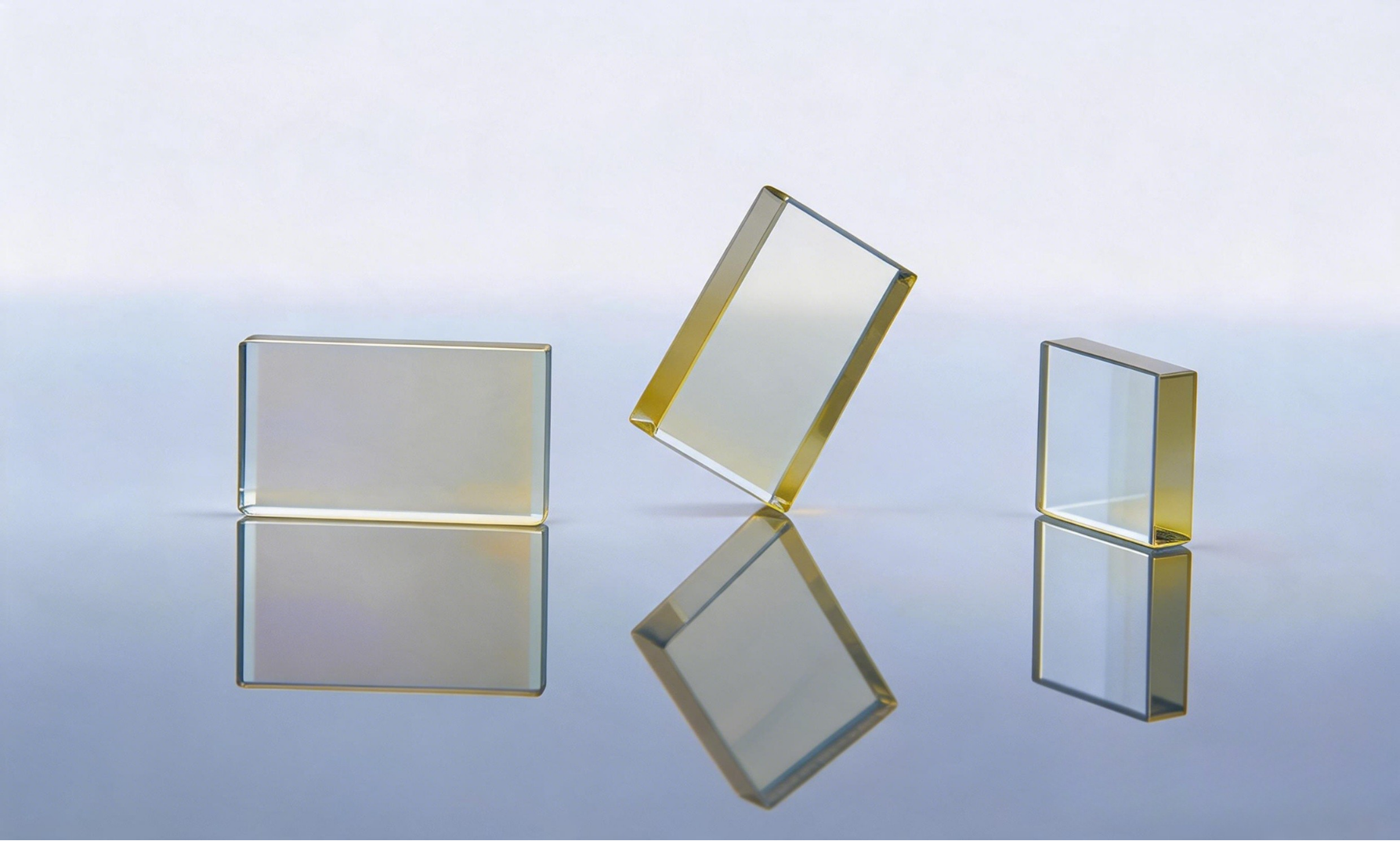
From the Faraday Effect to the Faraday Rotator
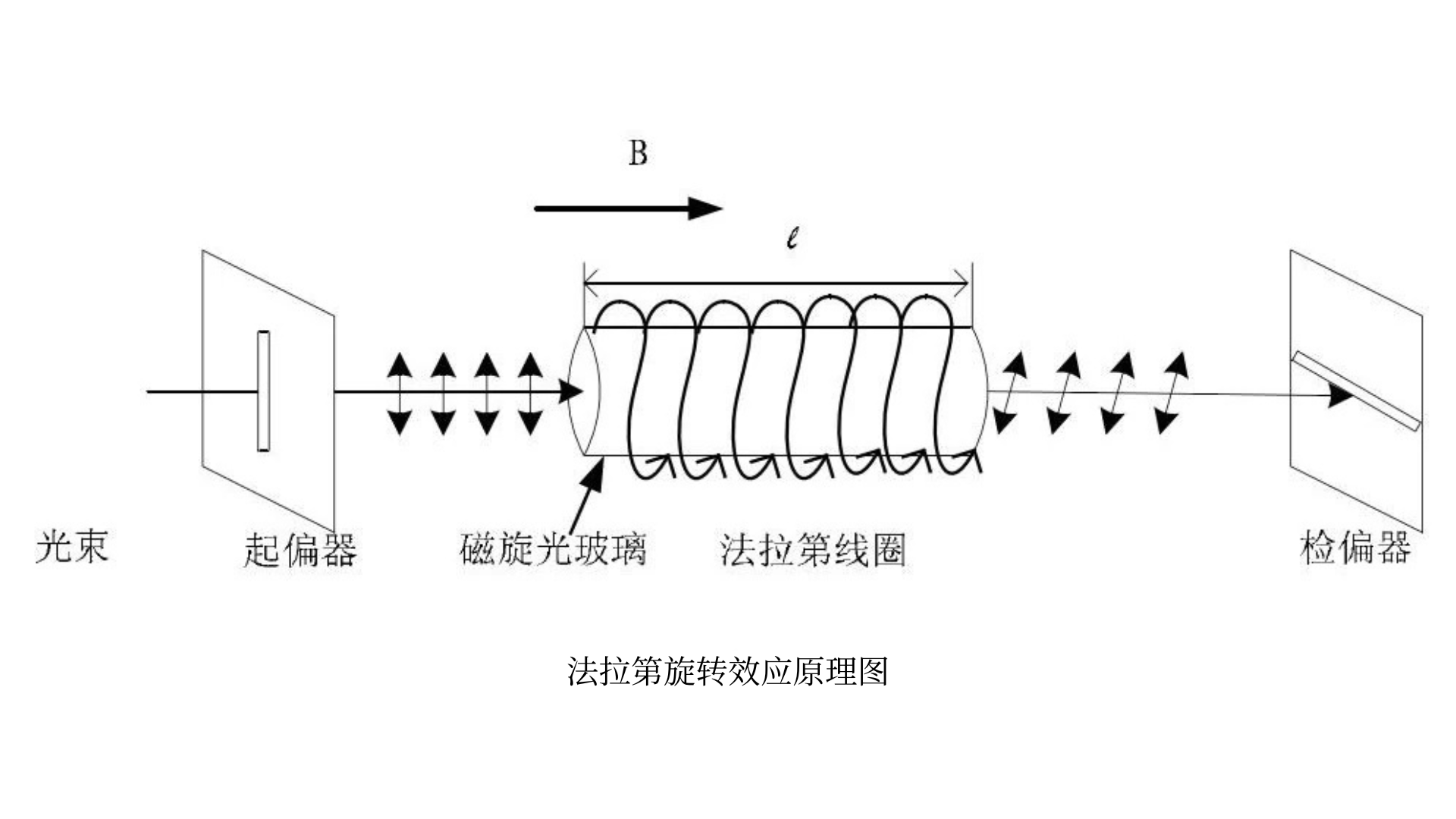
In 1846, Michael Faraday discovered the Faraday effect: when a beam of linearly polarized light passes through a medium in the presence of an external magnetic field along the direction of light propagation, the polarization plane of the outgoing light is rotated relative to the incident light—the rotation angle is proportional to the magnetic field component parallel to the optical path.
What truly brought this discovery from the laboratory to industrialization was the rigid demand of optical modules for "unidirectional light transmission."
In an optical module, the laser chip emits a signal light, which travels through the optical fiber to the remote end. However, connectors, splices, and device end faces within the fiber link generate reflected light that travels back to the laser chip, causing wavelength drift, power fluctuations, and in severe cases, directly burning out the chip. The solution to this problem is to place a "one-way valve" in the optical path—allowing forward light to pass while completely blocking reverse light.
The Faraday rotator is the core crystal of this valve. A magneto-optical crystal (commonly terbium gallium garnet, TGG, or yttrium iron garnet, YIG) is placed within a permanent magnet. When polarized light passes through, it is rotated by 45° and, combined with two polarizers on either side, forms an optical isolator: forward light passes through unobstructed, while reverse reflected light is blocked orthogonally by the polarizers.
The most essential property of the Faraday rotator is its non-reciprocity: the polarization direction of light rotates in the same direction when passing through in both the forward and reverse directions—the effects are additive rather than canceling. For this reason, although the Faraday rotator is small and structurally simple, it is the sole component in the optical isolator that determines the isolation direction. Therefore, its optical surfaces—the interfaces through which light enters and exits the device—typically require precise optical finishing.
Roughness and Flatness: Two Critical Lines for the Faraday Rotator
An ideal Faraday rotator allows incident linearly polarized light to undergo a uniform 45° polarization rotation after passing through the crystal, with the outgoing light remaining linearly polarized. However, if the flatness of the Faraday rotator is too large, different regions will experience varying degrees of rotation. These components with unequal rotation angles recombine into light that is no longer pure linearly polarized but degenerates into elliptically polarized light. As a result, the final polarization direction of the reverse light is no longer 90°, preventing it from being completely blocked by the input polarizer—rendering the optical isolator ineffective.
To enhance the overall optical performance of the isolator, the optical surfaces of the Faraday rotator are often coated, allowing incident light to interfere within the film layer, reducing reflection at the external optical surfaces and increasing light transmittance. The quality of the coating, however, heavily depends on the substrate roughness. Once the roughness exceeds the tolerance, two failure paths are simultaneously triggered:
First, the Faraday rotator generates heat due to light absorption during operation. The microscopic protrusions and depressions on a rough surface experience abnormally high localized light absorption, forming hot spots that preferentially heat up under high-power laser conditions. In severe cases, this can ablate the coating layer or even the substrate crystal.
Second, an insufficiently smooth substrate directly leads to uneven film deposition and poor adhesion. Under temperature cycling or mechanical stress, pinholes or even delamination may occur, causing a sharp increase in reflectivity in those areas.
Both failure paths lead to the same outcome: more backward light penetrates the isolator and returns to the laser chip, accelerating chip degradation and shortening the lifetime of the optical module.
In the industry, the flatness of a Faraday rotator is typically required to be less than 50 nm, and the surface roughness less than 1 nm. These extremely low roughness and excellent flatness values ensure the quality of light transmission and prevent aberrations and beam divergence caused by surface defects.
---
Atometrics White Light Interferometer AM-7000: Precision Measurement of Faraday Rotator Roughness and Flatness
To meet the sub-nanometer precision measurement requirements for the optical surfaces of Faraday rotators, traditional contact-type roughness testers fall short—they cannot capture three-dimensional surface topography and can only output a single-line two-dimensional profile.
Atometrics's White Light Interferometer, based on white light interference principles and equipped with a high-speed, large-range nano-piezoelectric ceramic stage, performs non-contact scanning and simultaneously outputs both roughness and flatness parameters in a single measurement, with a vertical resolution down to the sub-nanometer level.
A certain Faraday rotator manufacturer approached Atometrics with clear technical specifications for the optical surfaces of their products: surface roughness below 0.3 nm and flatness below 50 nm. Facing such sub-nanometer precision requirements, the customer chose the Atometrics White Light Interferometer AM-7000 series for inspection. The measurement results are shown below:
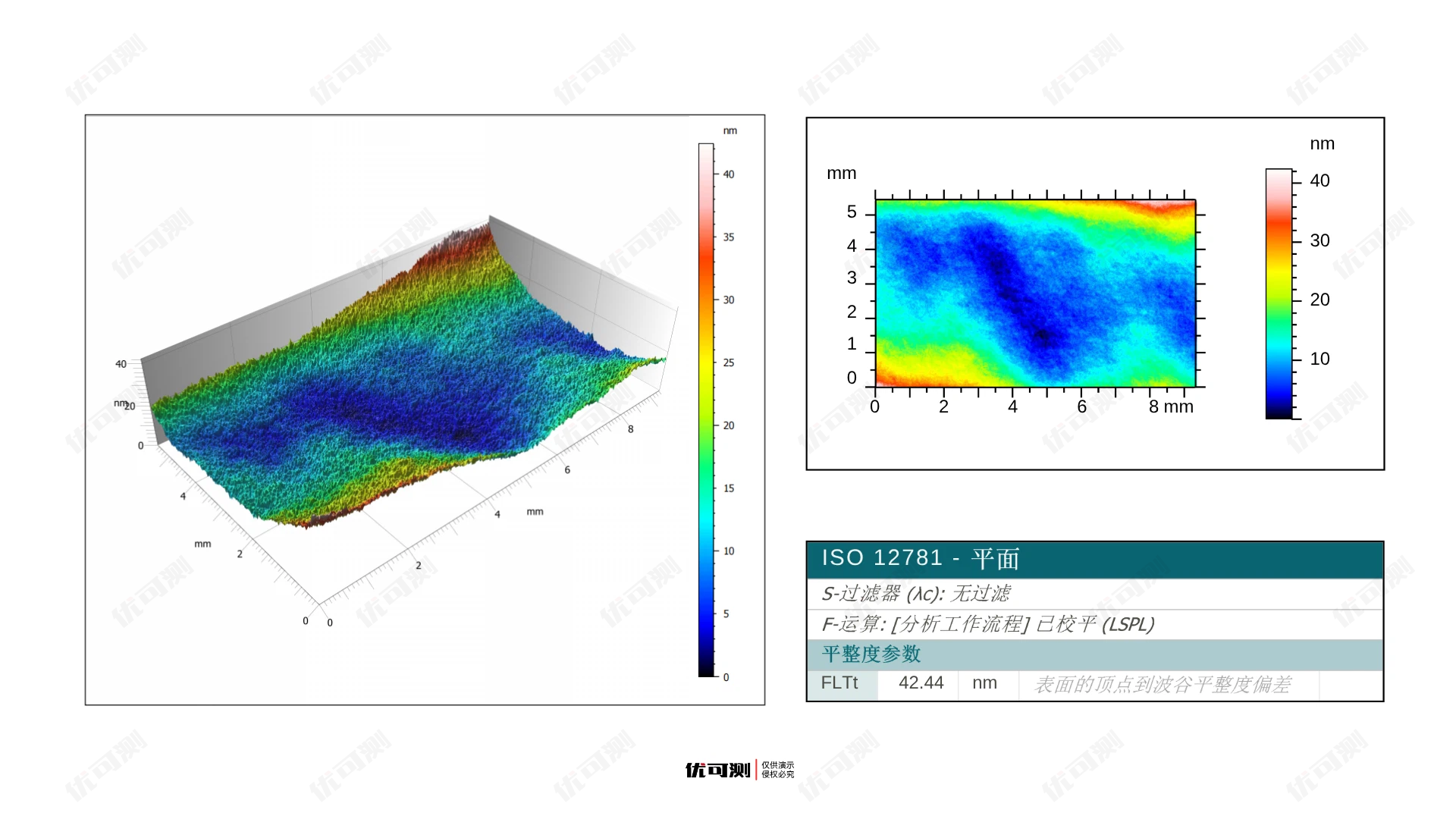
[Image: Flatness measurement result of the Faraday rotator using AM-7000 series]
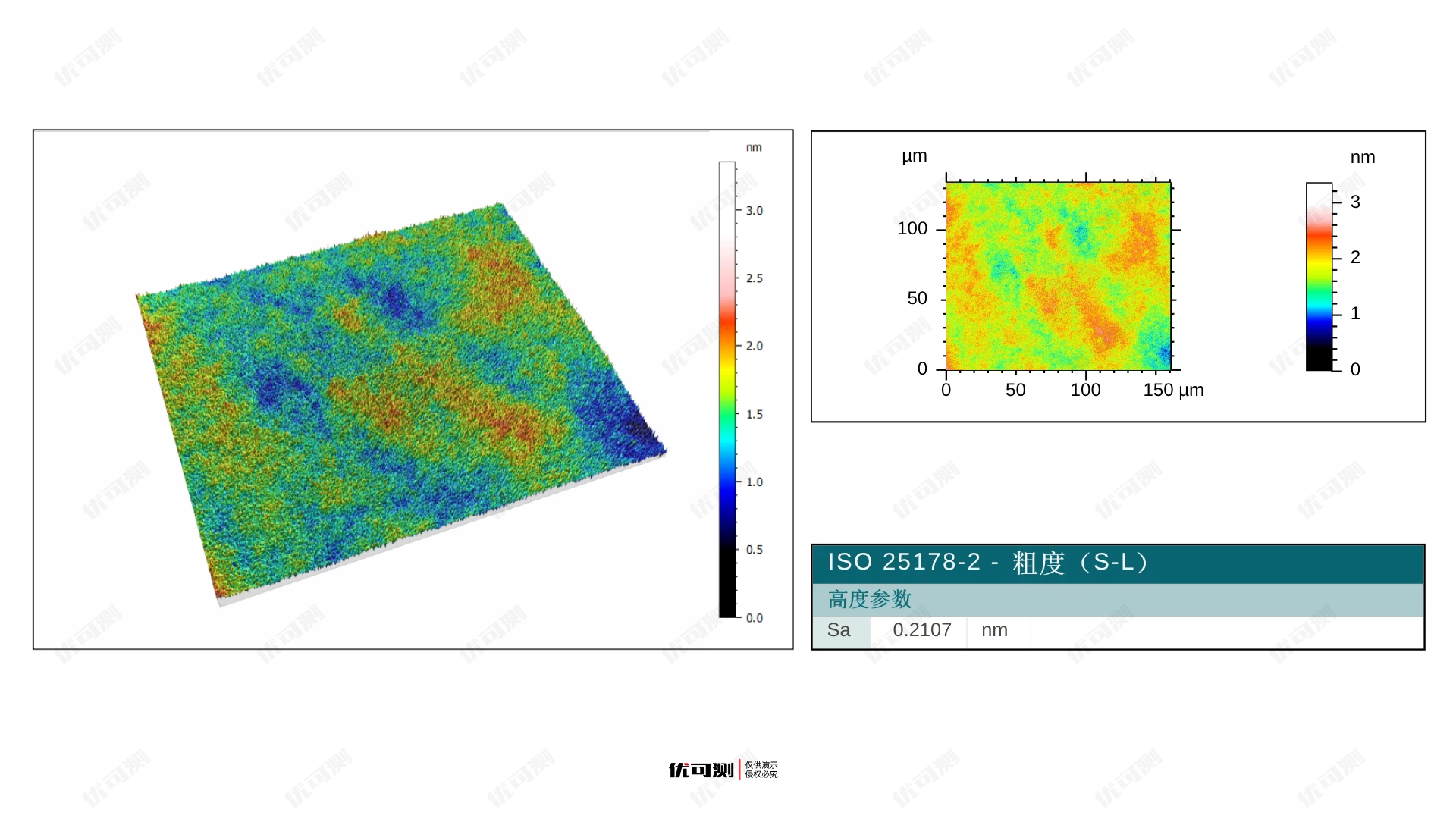
[Image: Roughness measurement result of the Faraday rotator using AM-7000 series]
The measured results show that the AM-7000 series achieved sub-nanometer precision measurements for both roughness and flatness on the optical surfaces of the Faraday rotator. The measurement data complies with ISO/GB/T/DIN/JIS and other global standards. The customer reported that the measurement data from the AM-7000 series were comparable to those from imported instruments, with significantly faster measurement speeds—up to 400 μm/s—greatly improving both measurement accuracy and efficiency, establishing a quality control gate for the manufacturing of Faraday rotators.
From the massive optical modules in AI data centers to sub-nanometer precision on a single Faraday rotator—at one end of this chain lies a trillion-dollar industrial wave, and at the other, a silent quality battle under the microscope. The Faraday rotator may not be the most expensive component in an optical module, but its surface quality defines the baseline of how long and how reliably an optical module can perform.
As optical modules evolve toward 1.6T and 3.2T speeds, this baseline will only tighten further.
---
**References**
[1] Ma Yingren. "New Magneto-Optical Materials—Faraday Rotation Glass." *Magnetic Materials and Devices*, 1987, (2): 42-45.
[2] Jin Shilong, Li Xiaohong, Yang Kaiyong, et al. "Machining of Faraday Rotators for Four-Frequency Differential Laser Gyroscopes." *Optics and Precision Engineering*, 2006, 14(1): 22-25.
[3] Guangyue Technology (Shenzhen) Co., Ltd. "Faraday Rotator, Preparation Method Thereof, and Isolator." CN122085547A. 2026-05-26.
[4] Ruan Yuanji, Feng Jingzhang, Zhu Zhengzhong. "Measurement of Faraday Rotation in Garnet Single-Crystal Films." *Journal of Instrumentation*, 1983, 4(4): 339-343.
[5] Zhang Qiwei. "Computing Power Demand Shines Bright in Optics." *China Electronics News*, 2026-05-08.
[6] Guo Qian, Wang Zichen. "AI Computing Power Drives Demand Surge, Domestic Optical Communication Products See Export Boom." *Economic Reference News*, 2026-05-29.

Boardstone lntelligent(Shenzhen)Co.,Ltd.
6F Building C Kaifa Plaza,7006 Caitian Rd.,Futian Dist,Shenzhen
Hotline:400 080 3885
Sales@atometrics.com.cn
WhatsApp: +86 13316897904